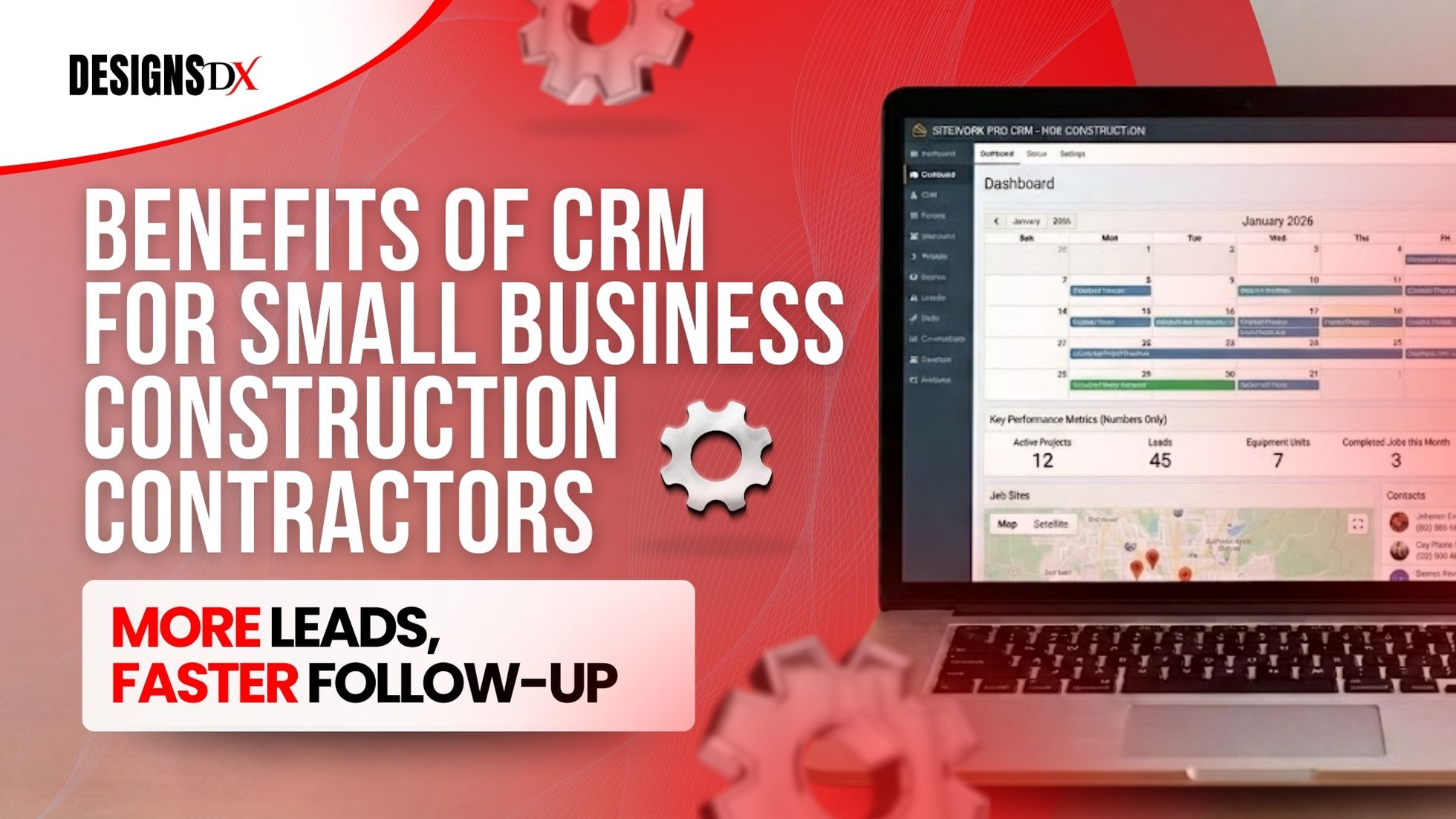
Benefits of CRM for Small Business Construction Contractors: More Leads, Faster Follow-Up, Clearer ROI
Benefits of CRM for small business construction contractors include better lead tracking, faster follow-up, fewer missed calls, clearer sales steps, and better visibility into which marketing efforts bring real jobs.
For small construction companies, a CRM helps stop leads from slipping through the cracks. Instead of relying on paper notes, memory, inboxes, or missed voicemails, your team can keep every call, form fill, estimate request, and follow-up in one organized place. See how we connect CRM with marketing automation for contractors so no lead goes without follow-up.
What Are the Benefits of CRM for Small Business Contractors?
The biggest benefits of CRM for small business contractors are better organization, faster response times, stronger follow-up, and clearer tracking from first call to booked job. A CRM helps construction companies know where each lead came from, what stage the lead is in, and what needs to happen next.
For busy contractors, this matters because every missed call or delayed reply can turn into a lost estimate. If your marketing brings in leads but your team does not follow up fast enough, you can lose work you already paid to attract.
What Does a CRM Mean for Construction Companies?
A CRM is a simple system that helps your business keep track of leads, calls, estimates, follow-ups, and booked jobs. Salesforce’s CRM guide explains CRM as a way for companies to manage customer relationships and interactions, which fits what construction companies need when leads come from many places.
For a contractor, the goal is not to make work harder. The goal is to make sure every lead has a clear next step.
A CRM can help you:
However,
For a CRM for construction business, the best setup is usually simple. Your team should be able to open it, see every lead, and know what needs attention right away.
If you want a simple breakdown of how follow-up tools work for small businesses, read this guide on CRM automation tools for small businesses.
Why Does CRM for Construction Business Help Contractors Win More Jobs?
Nevertheless,
A CRM for construction business helps contractors win more jobs because it keeps leads from getting forgotten after the first call or form submission.
Many construction companies already get leads from Google, referrals, ads, and website forms. The real problem is often what happens after the lead comes in.
Leads get lost when:
A CRM for construction business creates a clear process for every lead. That means your team knows who called, what they need, when they were contacted, and what should happen next.
When your follow-up is faster and more organized, more leads turn into scheduled estimates. If you want a complete lead system built around calls, booked estimates, and follow-up, explore lead generation for contractors.
What Are the Main Benefits of CRM for Small Business Contractors?
Therefore,
The main benefits of CRM for small business contractors are better lead control, faster follow-up, stronger organization, and clearer reporting.
Here are the biggest wins:
1. More Leads Are Captured
Consequently,
A CRM helps collect leads from different places, including website forms, phone calls, referrals, and online ads. This makes it easier to see all opportunities in one place instead of jumping between messages, notes, and inboxes.
2. Follow-Up Happens Faster
Fast follow-up matters. If a homeowner or business owner contacts three contractors, the one who replies first often gets the best chance to book the job.
A CRM makes it easier to respond quickly and keep the conversation moving.
3. Your Sales Steps Become Clearer
For instance,
Many contractors lose track of where each lead stands. A CRM helps you see whether a lead is new, contacted, scheduled, quoted, won, or lost.
This gives your team a simple view of the whole sales process.
4. Estimates Do Not Get Forgotten
In fact,
Sending the estimate is not the end of the process. Many leads need a reminder, a second message, or a quick check-in before they say yes.
A CRM helps make sure those follow-ups happen.
5. ROI Becomes Easier to Understand
A CRM can show which leads came from SEO, Google Business Profile, ads, referrals, or other sources. Google Business Profile tools can also help business owners manage how their company appears on Google, which supports local visibility and customer trust.
These are some of the most important benefits of CRM for small business contractors because they connect marketing, follow-up, and revenue in one simple process.
How Does an Automated Follow Up System Help Construction Leads?
Similarly,
An automated follow up system helps construction companies respond to leads faster without making the owner or office team remember every message manually.
For example, when someone fills out a form or misses your call, the system can send a simple message right away. That message can confirm their request, ask for more details, or guide them toward scheduling an estimate.
A helpful automated follow up system can support:
Likewise,
An automated follow up system does not replace your team. It simply helps make sure no lead is ignored when your crew is busy, your phone is ringing, or your office is handling other tasks.
If you want this set up for your business, Designs Dx offers contractor marketing automation solutions that help capture leads, text back missed calls, and keep follow-up moving.
Why Does CRM for Construction Industry Work Better With a Simple Sales Pipeline?
A crm for construction industry works best when the sales process is simple and easy to follow.
A small construction company does not need a complicated setup. Most contractors can start with a basic pipeline like this:
- 1
New Lead
- 2
Contacted
- 3
Estimate Scheduled
- 4
Proposal Sent
- 5
Won or Lost
With this in mind,
This simple structure helps your team know exactly where each lead stands.
A For example, crm for construction industry should make daily work easier, not harder. If the system is too confusing, your team will stop using it. If it is simple, it becomes part of the normal routine.
The best For instance, crm for construction industry is the one your team will actually use every day.
What Should You Look for in the Best CRM for Construction Companies?
As a result,
The best crm for construction companies should be simple, easy to use, and built around how contractors actually sell jobs.
Before choosing a CRM, look for features that help with real construction business needs.
Important features include:
The best crm for construction companies should also help your team answer three key questions:
In other words,
The best crm for construction companies is not always the one with the most features. It is the one that helps you book more jobs with less confusion.
For a broader small business view, HubSpot’s small business CRM tools explain how CRM systems can help smaller teams organize contacts, manage sales steps, and improve customer relationships.
How Can a Construction Company CRM Improve ROI?
Overall,
A construction company crm improves ROI by showing which leads turn into real booked work.
Without a CRM, many contractors only know how many calls or form fills came in. That is not enough. You need to know which leads became estimates, which estimates became jobs, and which source brought the best customers.
A construction company crm can help track:
This helps you stop guessing. If one marketing channel brings better jobs, you can put more attention there. If another channel brings weak leads, you can fix it or reduce wasted spend.
A In particular, construction company crm gives contractors a clearer view of what is working, what is being missed, and where more follow-up is needed.
If SEO is one of your lead sources, pairing your CRM with SEO for contractors can help you understand which search efforts are turning into real inquiries.
How Can You Set Up a CRM in 7 Days?
Furthermore,
You do not need a perfect setup to start. You need a simple setup your team can use right away.
Day 1–2: Build Your Foundation
Moreover,
Start by listing your lead sources. These may include:
Then create simple sales stages, such as new lead, contacted, estimate scheduled, proposal sent, and won or lost.
Day 3–4: Add Follow-Up Messages
Nevertheless,
Create basic messages for common situations:
In addition,
Keep the wording friendly and simple. It should sound like your business, not a robot.
Day 5–6: Track Leads and Results
Make sure every lead has a source. This helps you see where your best jobs are coming from.
Track simple results like:
Day 7: Train the Team
Consequently,
Show your team how to use the system in a simple way.
Make sure everyone knows:
For example,
Keep the process simple so your team will actually use it.
For more ideas on how paid ads, tracking, landing pages, and follow-up work together, read this guide on general contractor marketing.
Ready to Turn More Leads Into Booked Jobs?
A CRM works best when it is part of a complete growth system. For construction contractors, that means strong lead capture, fast follow-up, clear tracking, and a simple process from first contact to booked estimate.
At Designs Dx, we help construction companies and home service businesses improve lead tracking, follow-up, SEO, automation, and reporting so fewer opportunities are missed.
If your leads are coming in but not turning into enough booked jobs, it may be time to fix the system behind the marketing.
Frequently Asked Questions
Related Posts