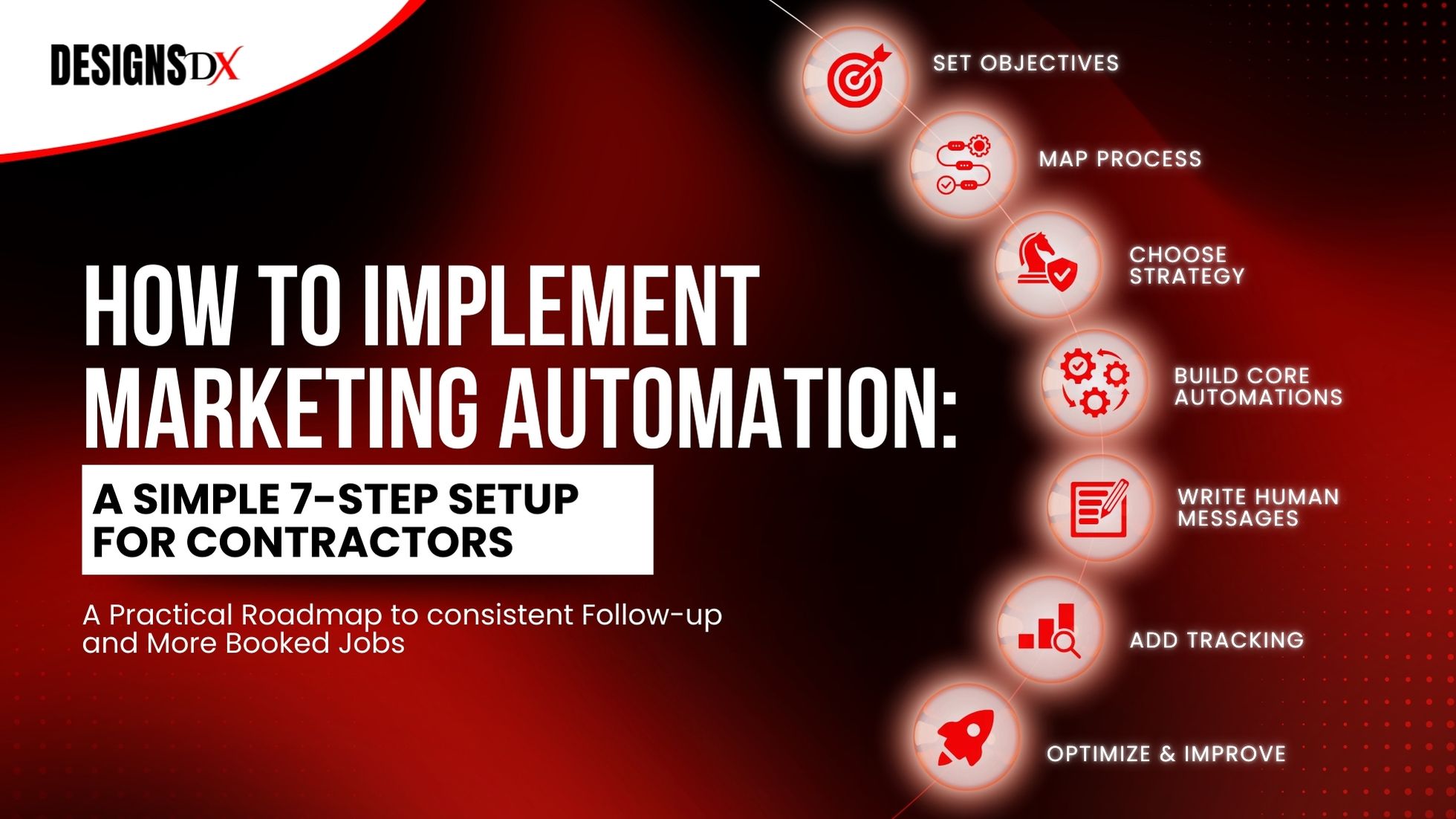
How to Implement Marketing Automation: A Simple 7-Step Setup for Contractors
How to implement marketing automation starts with building a simple follow-up system that helps contractors reply faster, remind leads, follow up after estimates, request reviews, and track booked jobs. It helps your business stop losing good leads because someone forgot to call, text, or follow up.
What Is Marketing Automation for Contractors?
Marketing automation for contractors is a simple system that sends the right message at the right time. It can help with new lead replies, missed-call text-backs, estimate follow-ups, appointment reminders, review requests, and lead tracking.
The goal is not to sound robotic. The goal is to make sure no good lead gets ignored.
If you want a deeper example of how this works for small businesses, you can read this guide on marketing automation for small business.
Why Do Contractors Need Marketing Automation?
Contractors need automation because leads often come in while the team is busy, on job sites, or handling current customers. When follow-up is slow, homeowners may call another company before you respond.
A simple system helps you:
However,
For busy contractors, marketing automation for contractors can help turn more of the leads you already have into booked jobs.
This is also why a strong lead system matters. A contractor may get traffic from ads, search, or referrals, but without fast follow-up, those leads can still disappear. Designs Dx explains this further in its lead generation for contractors service page.
How Does Marketing Automation Work?
Nevertheless,
Marketing automation works by setting up a simple chain of actions.
Trigger → Message → Next Step → Tracking
For example:
| Step | What Happens | Why It Matters |
|---|---|---|
| Trigger | A lead fills out a form or misses your call | The system knows someone needs a response |
| Message | A text or email is sent | The lead hears from you quickly |
| Next Step | The message asks them to book, reply, or confirm | The lead knows what to do |
| Tracking | You see if they replied, booked, or went cold | You know what is working |
This is the basic foundation of how to implement marketing automation without making your process complicated.
If you are running paid ads, tracking is especially important. Google’s guide to conversion tracking explains how businesses can measure actions such as calls, form fills, and other valuable customer steps.
Step 1: What Marketing Automation Objective Should You Choose First?
Therefore,
Choose one clear goal before setting anything up. Trying to automate everything at once can make the process confusing.
Good first goals include:
Consequently,
For most contractors, the best first goal is faster lead response or better estimate follow-up. These are usually the places where money is lost the fastest.
Step 2: How Should You Map Your Marketing Automation Implementation?
A strong marketing automation implementation starts by mapping the customer journey. This means writing down each step a lead takes before becoming a customer.
A simple contractor journey may look like this:
Lead → Contacted → Appointment Booked → Estimate Sent → Won or Lost → Job Complete → Review Request
Then ask:
Where do leads usually stop moving forward?
Common problem spots include:
For instance,
Start where the biggest lead leak is happening.
If your website is not built to capture leads clearly, automation may not have enough good leads to follow up with. A conversion-focused contractor website design can help make calls, forms, and next steps easier for visitors.
Step 3: What Is a Simple Marketing Automation Strategy?
In fact,
A simple marketing automation strategy should help you respond faster, follow up better, and make the next step clear.
A good contractor strategy includes:
You do not need a complicated setup. You need a system your team can actually use.
This is one of the most important parts of As a result, how to implement marketing automation because the system has to fit your real day-to-day work.
For contractors who want this built as a done-for-you system, Designs Dx offers contractor marketing automation solutions that focus on lead follow-up, reminders, and tracking.
Step 4: What Are the First 3 Automations Contractors Should Build?
Similarly,
The best place to start is with the three automations that usually affect booked jobs the fastest.
1. New Lead Instant Response
Likewise,
This message goes out when someone fills out a form, calls, or asks for help online.
Example:
“Thanks for reaching out. What service do you need help with, and what is the best time for us to call you today?”
This helps the lead feel seen right away.
2. Estimate Follow-Up
This message goes out after an estimate has been sent.
Example:
“Just checking in to see if you had any questions about the estimate we sent over. We are happy to walk through it with you.”
This keeps the homeowner from forgetting about your estimate.
3. Review Request
With this in mind,
This message goes out after the job is complete.
Example:
“Thanks again for choosing us. If you were happy with the work, could you leave us a quick review? It really helps local homeowners find us.”
This helps build trust and supports your local reputation.
These three messages are the core of marketing automation for contractors because they support the most important parts of the sales process.
Google also provides guidance on how businesses can ask for and manage customer reviews, which is helpful when you are building a review request process.
Step 5: How Do You Write Automated Messages That Sound Human?
As a result,
Write messages like a real person from your business would talk. Keep them short, clear, and helpful.
Good automated messages should be:
Avoid wording that sounds cold or corporate.
Instead of:
“Your inquiry has been received and entered into our system.”
Say:
“Thanks for reaching out. We received your request and will follow up soon.”
Simple messages work better because people know exactly what to do next.
Step 6: What Should You Track During Marketing Automation Implementation?
In other words,
During marketing automation implementation, track the numbers that show whether the system is helping your business book more jobs.
Start with these:
| What to Track | Why It Matters |
|---|---|
| Response time | Shows how fast your team replies |
| Booking rate | Shows how many leads become appointments |
| Estimate follow-up rate | Shows whether estimates are being followed up |
| Close rate | Shows how many estimates turn into jobs |
| No-show rate | Shows whether reminders are working |
| Review count | Shows whether review requests are helping |
Overall,
Tracking does not need to be complicated. You just need to know what is helping and what needs improvement.
If you want to see how tracking and follow-up connect to real growth, browse the contractor marketing case studies from Designs Dx.
Step 7: How Do You Improve Marketing Automation Over Time?
Improve one thing at a time. Small changes are easier to measure and easier for your team to manage.
You can improve by:
Furthermore,
This is how to implement marketing automation in a way that keeps getting better without overwhelming your team.
14-Day Plan: How to Implement Marketing Automation
Moreover,
Here is a simple rollout plan contractors can follow.
| Timeline | Focus | What To Do |
|---|---|---|
| Days 1–2 | Pick one goal | Choose the biggest problem, such as missed calls or estimate follow-up |
| Days 3–5 | Build first automations | Set up new lead reply, missed-call text-back, and appointment reminder |
| Days 6–7 | Write messages | Keep messages short, friendly, and clear |
| Days 8–10 | Test everything | Submit test forms, make test calls, and check message timing |
| Days 11–14 | Launch and track | Turn on the system and watch replies, bookings, and follow-ups |
This gives you a simple way to start without building a huge system all at once.
Do You Need a Marketing Automation Strategist?
Nevertheless,
You may not need help if you only want one or two basic follow-up messages. But a strategist can help if your leads come from many places or your team does not have a clear follow-up process.
You may need help if:
In addition,
The goal is not to add more work. The goal is to make follow-up easier and more consistent.
What Mistakes Should Contractors Avoid?
Contractors should avoid making automation too complicated too soon.
Common mistakes include:
Consequently,
A good automation system should support your team, not replace the human side of your business.
When sending review requests or using customer feedback in marketing, it is also important to follow honest review practices. The FTC shares guidance on soliciting and paying for online reviews, which can help businesses avoid misleading review tactics.

Frequently Asked Questions
Related Posts